
Arabic Salsa Meets Penang Achar on Tarboush’s Mandi Plate

Arabic salsa and Penang achar give Tarboush’s mandi plate two different ways to move beyond a mouthful of chicken and rice. The interesting part is how you eat them: a little salsa with one spoonful, some achar alongside the next, then a bite that brings everything together. The accompaniments make the plate worth exploring rather than mixing all at once.
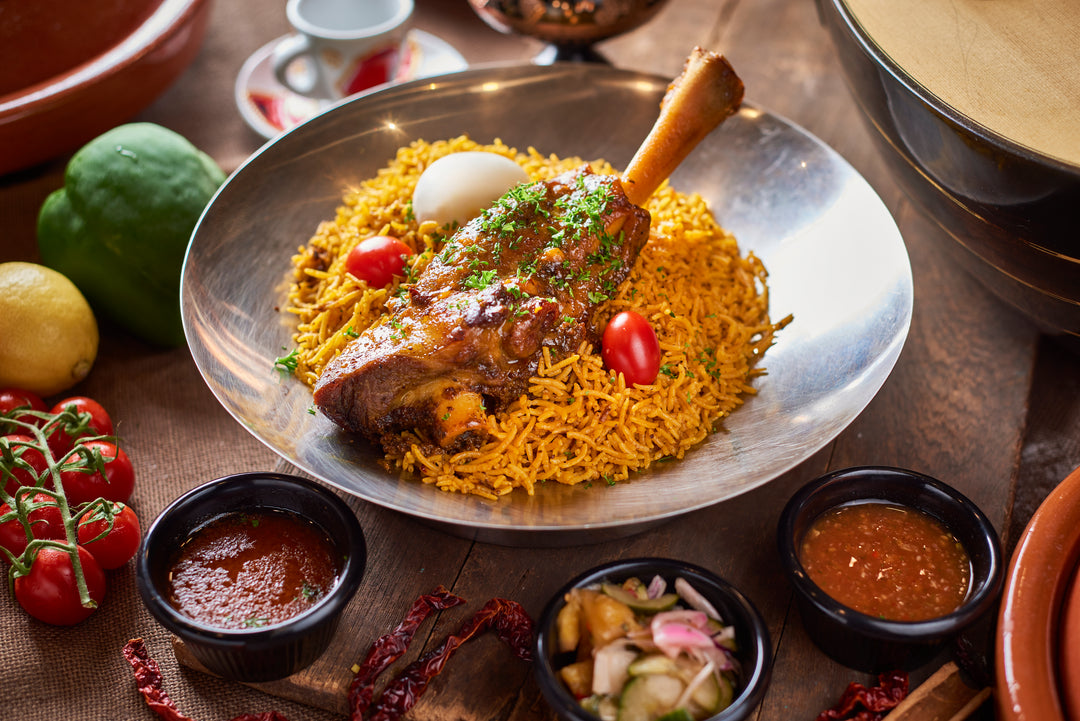
Tarboush’s Mandi Roasted Chicken includes half a chicken marinated overnight in a special spice blend, mandi rice, a saffron-boiled egg, Arabic salsa and Penang achar salad. That combination puts the relationship between an Arabic rice dish and a regional accompaniment right on the plate.
Why the mandi needs room to speak
Before adding either accompaniment, try the chicken and rice together. This gives you a starting point: you can notice the seasoning of the main dish before deciding how much salsa or achar suits it.
Tarboush describes mandi as smoky, aromatic and mildly spiced in its guide to mandi, kabsa and maklouba. Those qualities explain the appeal of serving accompaniments alongside it. A rice dish with its own fragrance benefits from additions that you can control, spoonful by spoonful.
Think of the rice as the link between the chicken and the sides. A small amount carries their flavours into the same bite; a larger proportion lets the mandi remain the main impression. Neither approach is wrong. The useful question is whether you can still taste the rice after adding everything else.
Arabic salsa changes the bite itself
The salsa is the accompaniment to try when you want to change a mouthful without adding another substantial piece of food. Spoon a little onto a small portion of rice, then add chicken. This lets you judge what the sauce contributes before spreading it across the plate.
Tarboush names the accompaniment as Arabic salsa but does not publish its ingredients or heat level on the product page. It would therefore be misleading to promise a particular tomato, chilli, garlic or herb recipe. Let the first taste tell you how sharp, spicy or gentle this version is.
As an eating suggestion, use the salsa to connect the chicken and rice. Put it where those two meet on your spoon instead of pouring it over the chicken alone. You can then adjust the amount according to the result: a little more if you enjoy its impact, less if it begins to cover the main seasoning.
This approach also avoids making the entire meal depend on your first guess about the sauce.
Penang achar gives the meal a separate counterpoint
Achar is generally a pickled vegetable accompaniment, so its culinary role differs from that of a spoonable salsa. It brings a separate bite into the meal, with the potential for acidity and textural contrast alongside the rice and meat.
The precise vegetables, dressing and texture of Tarboush’s Penang achar are not detailed in the listing. The pairing can still be understood without inventing that recipe: Tarboush’s mandi guide specifically recommends Penang achar to balance the dish’s smoky flavours.
Try the achar after a mouthful of chicken and rice before combining it with them. Tasting it separately makes it easier to decide whether you prefer that contrast between bites or within a single spoonful.
If you enjoy a clear change of flavour, keep it alongside the main dish. If you prefer the flavours together, add a small piece to your next bite. There is no need to distribute the entire portion through the rice to appreciate what it brings.

Why the two accompaniments belong together
The strongest reason to serve both is flexibility. Salsa can become part of the rice, while achar can remain a distinct mouthful. Even when both contribute lively seasoning, the way you use them creates different eating experiences.
That distinction matters over the course of a full plate. You may want chicken and rice on their own at first, then a more assertive spoonful later. Keeping both accompaniments available lets you make that adjustment without changing the main dish.
For a Singapore meal, the combination also offers an approachable meeting point between Arabic cooking and a regional pickle. The connection is easy to explore through taste: keep the mandi as the centre, then see how the Penang accompaniment fits around it.
It is best understood as Tarboush’s serving combination. The menu does not establish Penang achar as a universal component of traditional mandi, and the pairing needs no such claim to be interesting.
A simple way to explore the whole plate
You do not need a tasting ritual, but a little order helps you notice the differences:
-
Start with chicken and rice. Take enough of each to understand their balance before adding a condiment.
-
Try a small amount of salsa. Add it to one spoonful so you can judge its intensity without committing the whole plate.
-
Taste the achar separately. Then decide whether to alternate it with the mandi or combine it in the same bite.
-
Bring both together gradually. Keep chicken and rice as the largest part of the spoonful, adjusting the accompaniments to your preference.
-
Include the egg along the way. Try a piece with rice, then with a little salsa, rather than leaving it automatically until the end.
Once you find a combination you enjoy, there is no reason to follow a fixed sequence. The point is to discover what each component adds, then eat the plate your way.
FAQs
Does Arabic salsa come with the Mandi Roasted Chicken?
Yes. Tarboush lists Arabic salsa as an included accompaniment, alongside mandi rice, a saffron-boiled egg and Penang achar salad.
How spicy are the salsa and achar?
The product listing does not specify their heat levels. Ask Tarboush before ordering if chilli intensity matters to you, and taste a small amount first.
Should I mix both accompaniments into the rice?
Start with small amounts in individual spoonfuls. This helps you find your preferred balance and keeps the rest of the rice available for different combinations.
Can I try this pairing with lamb?
Yes. Tarboush’s Mandi Lamb Shank also lists mandi rice, a saffron egg, Arabic salsa and Penang achar salad with its spiced braised lamb.