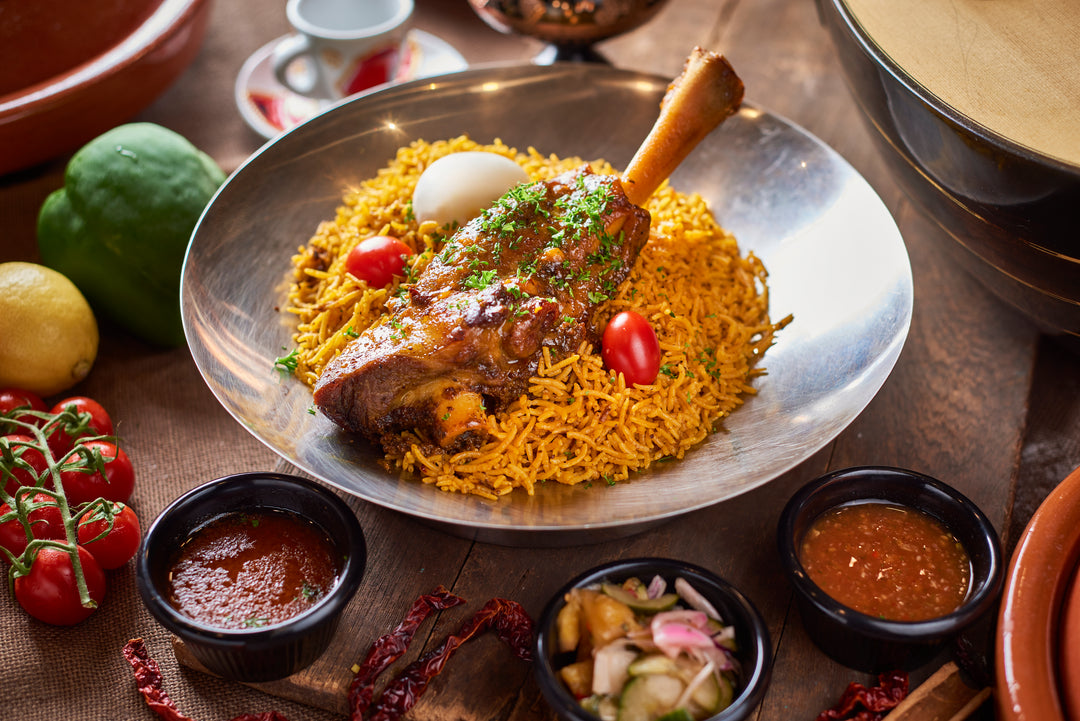

Why Does Mandi Rice Smell So Good Before the First Bite?

Mandi rice smells so good because fragrant rice, warm spices, meat juices and a smoky cooking finish contribute different aromas to the same dish. Heat releases those scents into the air, allowing your nose to pick them up before your fork reaches your mouth.
That first impression has several layers. You might notice a sweet, almost floral scent, followed by roasted meat and a gentle smokiness. Underneath sits the comforting fragrance of the rice itself. Understanding where each layer comes from explains why a freshly served plate can be so inviting without needing an overpowering spice blend.
Basmati Gives the Aroma Its Starting Point
The fragrance begins with the grain. Basmati has a naturally aromatic character, often described as nutty, popcorn-like or softly reminiscent of pandan. For diners in Singapore, that pandan association offers a familiar reference, although it does not mean pandan leaves have been added to the mandi.
One naturally occurring aroma compound, called 2-acetyl-1-pyrroline, helps give fragrant rice this recognisable scent. You do not need to remember the name; the useful point is that the rice contributes its own fragrance before any seasoning enters the pot.
This matters because mandi needs a rice aroma that can sit alongside meat and spices. The basmati provides a gentle background, giving the sharper spice notes something to settle into. Its fragrance remains part of the finished dish rather than disappearing behind the toppings.
Warm Spices Add Several Distinct Scents
Mandi’s spice blend varies between cooks, but familiar ingredients include cardamom, cloves, cinnamon and bay leaves. Tarboush’s guide to mandi rice describes these aromatics, alongside saffron, in its explanation of spiced rice cooked in meat broth.
Each spice brings a different impression. Cardamom can smell fresh, citrusy and slightly floral. Cloves offer a deeper, pungent warmth. Cinnamon contributes a sweet, woody fragrance, while bay leaves bring a quieter herbal note. Where saffron is used, it adds a distinctive, delicate fragrance of its own.
These ingredients contain aromatic oils that release scent during preparation and cooking. Cracking a cardamom pod or warming spices makes those aromas easier to notice.
The balance matters more than the number of spices. Too much clove can dominate; heavy cinnamon can obscure the rice. A well-judged blend leaves room for individual notes while still smelling like one complete dish.
Broth and Fat Bring the Fragrance Through the Rice
Cooking rice in seasoned meat broth gives the aroma somewhere to develop beyond the surface. As the grains take up cooking liquid, they also take on flavour from the broth. The result is a savoury character throughout the rice, rather than seasoning concentrated only where a sauce touches it.
Fat also has a role. Depending on the recipe, this may come from meat drippings, ghee or added oil. Many spice aroma compounds dissolve readily in fat, helping distribute them through the dish. Fat also influences how those compounds are held and released, so adding more does not automatically create a stronger smell.
This is why a spoonful taken from beneath the meat can still be deeply aromatic. Much of the character belongs to the cooked rice and its seasoning, not simply to the portion placed on top.
Cooked Meat and Smoke Add Different Kinds of Depth
The warm smell of cooked meat is another part of the experience. Heating meat creates aroma compounds, and browning its surface adds roasted, toasted notes. Those aromas mingle with the spiced rice when the components are served together.
Smoke contributes a separate quality. In traditional mandi preparation, meat cooks in an enclosed oven, commonly an underground oven, with the rice positioned to receive its juices. The fuel and cooking conditions influence the finished aroma. Modern kitchens use different equipment and may achieve a smoky character through other finishing methods.
Roasted and smoky do not mean exactly the same thing: meat can develop a browned aroma without being smoked. In mandi, the combination can feel especially rounded because the smoky edge sits alongside the gentler rice and spice scents.
At Tarboush, the Mandi Roasted Chicken features half a chicken marinated overnight with a special spice blend. The Mandi Lamb Shank features braised lamb with its own spice blend. These are two different meat preparations accompanying mandi rice; their product descriptions do not specify the exact smoking method.

Warmth Explains the Burst When the Lid Opens
The dramatic first whiff is partly about timing. Warm food generally releases aroma molecules into the surrounding air more readily than cooler food. Around a freshly opened dish, rising warm air brings those scents towards your nose.
Under a lid, aromatic vapours can collect in the space above the food. Opening it releases that concentrated pocket, which helps explain why lifting a takeaway lid can feel more fragrant than smelling the same plate several minutes later.
Steam itself is not the spice fragrance. The smell comes from aroma molecules released by the food alongside the water vapour. As the dish cools and those molecules disperse into the room, that initial burst becomes less pronounced.
For the clearest first impression, pause briefly when the mandi arrives, before mixing in salsa or other condiments. Their stronger scents can change which parts of the rice aroma you notice.
Your Nose Gets a Preview of the Meal
Before eating, you detect food aromas through your nostrils. Your brain interprets that mixture as the smell of rice, spices, meat and smoke. If those scents are familiar and enjoyable, they can bring an immediate sense of anticipation.
Once you start chewing, aromas also reach the nose from the back of the mouth. That is why the fragrance you noticed across the table becomes part of the flavour of each mouthful.
Smell and taste therefore contribute at different moments. Your tongue has not yet registered the salt or savouriness when the plate arrives, but your nose has already provided a detailed preview.
Frequently Asked Questions
Does fragrant mandi rice have to be chilli-hot?
No. Cardamom, cinnamon and cloves provide fragrance without requiring substantial chilli heat. A dish can smell richly spiced while tasting relatively mild; accompanying salsa may add extra heat.
Does yellow mandi rice always contain saffron?
No. Colour alone cannot identify the seasoning. Recipes may use saffron, turmeric or other colouring ingredients. Check the dish description rather than assuming yellow rice proves saffron was used.
Can mandi rice smell good without meat on top?
Yes. Aromatic rice and spices contribute fragrance independently. However, rice served without a meat portion may still have been cooked in meat broth, so it is not automatically vegetarian.
Does a stronger smoky smell mean better mandi?
No. Smoke should complement the grain, seasoning and meat. An overpowering smoky smell can hide the subtler aromas that make the dish enjoyable.
Will reheated mandi smell exactly like a fresh serving?
Usually not. Warming can release remaining aromas, but some delicate notes escape during the original cooking and serving. Reheating cannot fully recreate that first burst from a freshly opened pot.