
Why Every Mediterranean Meal Deserves a Dessert Finale

A Mediterranean meal can build beautifully: creamy hummus, bright salads, warm bread, aromatic rice, smoky grilled meats and layers of herbs and spices. But when the plates are cleared immediately after the main course, the experience can feel as though it stops one chapter too early.
Dessert gives the meal a proper ending. Not simply because something sweet is enjoyable, but because the right dessert changes the flavour, texture and pace of the table. After savoury, smoky or spice-forward dishes, sweetness introduces contrast. Fragrant ingredients such as rosewater, saffron and pistachio carry familiar regional flavours in a completely different direction. And when dessert is shared, it gives diners a natural reason to stay at the table rather than rush away.
That is why a Mediterranean meal deserves more than a main course followed by the bill. The finale matters.
Dessert Creates the Contrast a Savoury Meal Needs
Mediterranean and Middle Eastern meals often move through several powerful savoury flavours. You may start with creamy dips and acidic salads before moving to rice, grilled meat, cheese, bread or spice-rich mains.
Trying to end on another savoury note adds little to the experience. Dessert works precisely because it changes direction.
Sweetness After Smoke and Spice
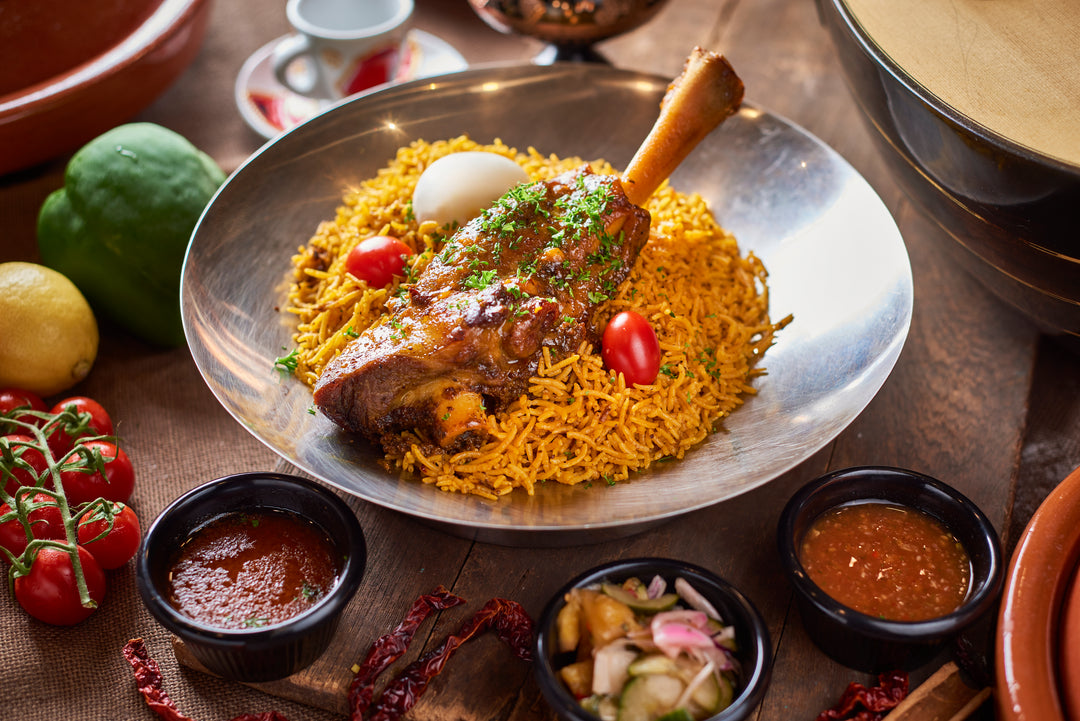
Consider a meal built around charcoal-grilled meat. The main course may deliver smoky edges, savoury seasoning and a substantial, satisfying texture. Following it with something delicate and aromatic immediately gives the palate a different experience.
Muhalabiah is a good example. Tarboush prepares the dessert with milk, sugar and rosewater, finished with pistachio or honey. Instead of trying to compete with the richness of dinner, its creamy texture and floral character provide a noticeably different closing note.
When the main course has been bold, dessert does not necessarily need to be equally heavy. Sometimes its job is simply to offer contrast.
Texture Is Just as Important as Sweetness
A successful dessert finale also changes the way the meal feels.
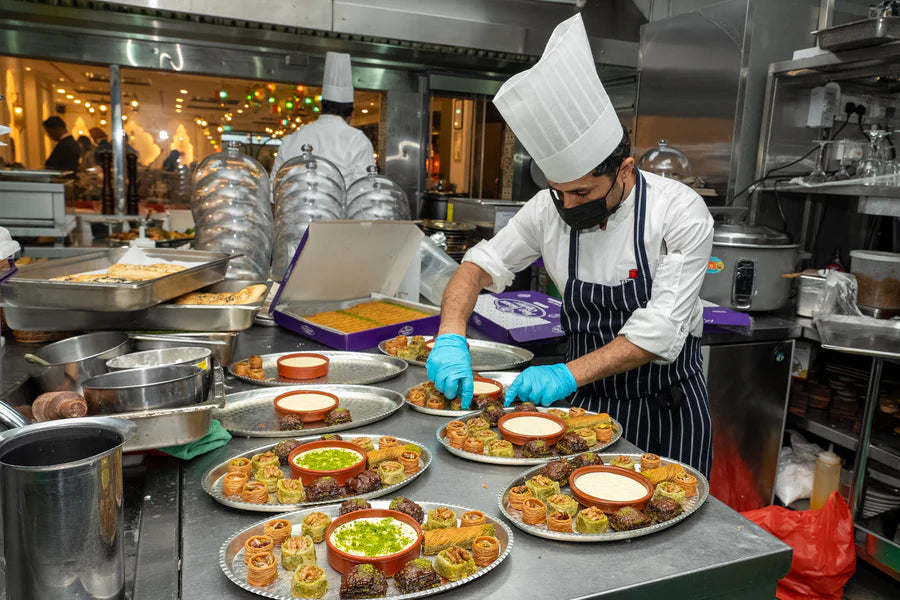
Baklava combines pastry with chopped nuts, pistachios and honey, creating crispness and crunch after softer dishes such as hummus, rice or grilled meats.
Kunafeh takes a different approach, pairing thin shredded pastry with soft cheese and syrup. The appeal comes from the interaction between the crisp exterior, soft centre and sweetness rather than sugar alone.
A memorable finale therefore changes both flavour and texture.
The Best Desserts Continue the Mediterranean Flavour Story
A completely unrelated dessert can satisfy a sweet craving, but a well-chosen Mediterranean dessert does something more interesting: it continues ingredients and aromas associated with the wider meal.
Pistachio, honey, nuts, rosewater and saffron can appear in different combinations, allowing the dessert course to feel connected to everything that came before it without tasting repetitive.
Take Bastani saffron ice cream. Tarboush's version combines Persian rosewater, saffron and pistachio in ice cream. Those aromatic flavours give the dessert a distinctive character while the cold temperature provides an especially refreshing finish after a substantial meal.
The same principle makes pistachios so effective across several sweets. Their nuttiness prevents a dessert from becoming purely sugary while also adding colour, fragrance and texture.
A good dessert finale should therefore do three things:
-
Introduce a clear contrast to the savoury courses.
-
Retain enough familiar flavours to belong naturally with the meal.
-
Leave a distinctive final impression without overpowering everything eaten before it.
That balance is what separates a thoughtful final course from simply adding something sweet.
Dessert Gives the Table a Reason to Slow Down
There is another reason dessert belongs at the end of a Mediterranean meal: the meal is not only about eating.
Across Mediterranean food traditions, sharing food is closely connected with hospitality, conversation and communal dining. Eating together has long been treated as an important social experience rather than simply a way to consume food.
Dessert naturally extends that experience.
A large main course tends to command attention while people are hungry. By dessert, the urgency disappears. Diners can split a pastry, take small spoonfuls, order coffee or tea and continue talking.
This is particularly effective with shareable sweets. Sobiyet, for example, combines flaky phyllo pastry with creamy kaymak, semolina and chopped nuts. Its pastry format makes it an easy choice when the table wants a few final bites rather than another full-sized course.
Coffee can extend that moment even further. Across parts of Arab culture, coffee has a longstanding connection with hospitality and is commonly enjoyed alongside dates or sweets.
Dessert, in other words, creates a transition from eating dinner to enjoying the table.

How to Match the Dessert to the Meal
Not every Mediterranean dinner needs the richest dessert available. Choosing according to what came before makes the finale far more satisfying.
-
After a rich mixed grill or meat-heavy dinner: Choose something cooler or gentler, such as Muhalabiah or Bastani saffron ice cream.
-
After lighter mezze or a modest main: A crisp pastry such as Baklava or Sobiyet adds richness without requiring another substantial dish.
-
For a celebratory dinner: Kunafeh with ice cream makes the finale more dramatic, combining crunchy shredded filo, cheese and semolina with scented syrup and saffron-pistachio ice cream.
-
When you want something warm and comforting: Um Ali offers a baked combination of milk, cream and assorted nuts, with pistachio ice cream available as an addition.
-
When several people are sharing: Order one or two contrasting desserts for the table instead of giving everyone the same choice. A crisp pastry paired with a creamy or chilled dessert creates more variety without making the finale unnecessarily large.
The point is not to make the meal heavier. It is to make the ending better.
A Dessert Finale Works Particularly Well for Singapore Dining
Singapore's climate and sharing-oriented dining occasions make variety especially useful.
After a generous dinner, a chilled saffron ice cream or creamy rosewater pudding can feel very different from a warm pastry. At the same time, diners celebrating birthdays, family gatherings or relaxed dinners with friends may prefer something more indulgent and shareable such as kunafeh.
That flexibility matters. “Dessert” does not have to mean an oversized slice of cake after an already filling dinner. It might be a few pieces of nutty pastry shared among four people, several spoonfuls of a milk pudding or a scoop of aromatic ice cream.
Tarboush's current selection reflects that range, offering traditional Middle Eastern options alongside familiar cakes, so groups with different preferences do not have to finish their meal in exactly the same way.
The Last Bite Is What Completes the Meal
A great Mediterranean meal is built through progression. Savoury starters awaken the appetite, mains bring depth and substance, and dessert provides the change of direction that signals the meal is reaching its conclusion.
More importantly, dessert can preserve the character of the cuisine all the way to the final bite. Rosewater, saffron, honey, pistachios, creamy fillings and crisp pastry do not feel like additions disconnected from dinner. They become another expression of the same culinary world.
And because Mediterranean dining places such value on hospitality and sharing, dessert also performs a social role. It slows the table down, encourages sharing and gives conversation somewhere to continue.
The future of the dessert finale does not need to be about bigger or sweeter portions. It is about choosing better endings: something warm when the occasion calls for comfort, something chilled after a rich meal, or one beautiful pastry shared across the table.
FAQs
Is dessert always served after a Mediterranean meal?
Not necessarily. Mediterranean cuisine covers many countries and traditions, so there is no single rule. However, sweets, fruit, tea or coffee can provide a natural social and flavourful conclusion to a shared meal.
What dessert goes well after kebabs or grilled meat?
A lighter dessert such as Muhalabiah or Bastani saffron ice cream works particularly well after rich grilled dishes because it provides a creamy, floral or cooling contrast.
Which Mediterranean desserts are good for sharing?
Baklava, Sobiyet and Kunafeh are particularly suitable for sharing. Ordering one or two desserts for the table is also an easy way to enjoy different flavours without making the meal too heavy.
Are Tarboush Singapore's desserts halal?
Tarboush states that its food is 100% halal and that the restaurant is Muslim-owned.