
Why Cold Mezze Is the Perfect Start to an Arabic Meal

The easiest mistake to make with Arabic food is to rush straight to the grill or the rice. That makes sense on paper: kebabs are dramatic, mandi is comforting, and a lamb shank naturally draws attention. But when diners skip the cold mezze, they skip the part of the meal that sets the tone. In Arabic and broader Eastern Mediterranean dining, mezze is not just a filler before the “real food.” It is part of the real food: a shared spread of small plates that opens the appetite, creates conversation, and introduces the table to the meal’s full flavor range. Tarboush’s Singapore menu reflects that structure clearly, with a dedicated cold appetizers section before its charcoal-grilled dishes and rice specialties such as mandi, kabsah, and makloubah.
That is exactly why cold mezze is the perfect start to an Arabic meal. It arrives with generosity, not heaviness. It gives everyone something to reach for immediately. And it introduces the core building blocks of the cuisine, from chickpeas and tahini to smoky eggplant, lemon, olive oil, herbs, and warm bread. At a restaurant like Tarboush, that matters even more because the menu spans both classic cold starters and hearty mains, making the first order the moment that shapes the rest of the experience.
Cold mezze sets the rhythm of the table
A good Arabic meal does not begin with everyone staring at separate plates. It begins with the center of the table filling up. That is the quiet brilliance of cold mezze: it changes the meal from ordering into gathering. Shared plates encourage diners to pass food, compare favorites, and begin eating together instead of waiting for individual mains to land. Tarboush describes authentic Arabic dining in Singapore as “sharing-style dining” with family-style portions, and its own writing on group dining emphasizes that Middle Eastern food is built around abundance, variety, and communal eating.
That social role is not just restaurant marketing language; it matches broader Middle Eastern dining culture. Serious Eats notes that at larger Palestinian gatherings, the table typically includes a show-stopping main alongside salads and spreads, with bread constantly present and used to scoop food. Smithsonian’s interview with Claudia Roden also highlights generosity and serving others as central features of Middle Eastern hospitality. Put simply, cold mezze works because it starts the meal with interaction.
At Tarboush, that rhythm is especially visible because the cold appetizer selection is built to be shared. The menu includes a Mezzeh Appetiser Platter, Palestinian Hummus, Beetroot Hummus, Avocado Hummus, Muttabal, and Babaganoosh, all in a section designed to act as the opening spread. Even the individual item descriptions reinforce the ritual: several are served with freshly made Palestinian bread or Arabic bread, which turns the first course into a hands-on, communal part of the meal rather than a formal prelude.
It wakes up the palate without stealing the show
The best starter should make you more excited for the dishes that follow, not less. Cold mezze does that exceptionally well because its flavors are bright, creamy, smoky, tangy, and herbal rather than overwhelmingly rich. Palestinian hummus at Tarboush is made with pureed chickpeas, tahini, and lemon juice; muttabal is a creamy charcoal-grilled eggplant dip with tahini and lemon; and babaganoosh leans into smoky aubergine, lemon, olive oil, and capsicum. Those are bold flavors, but they are not blunt ones. They sharpen the appetite.
That flavor logic is one reason cold mezze works so well before charcoal-grilled meats and rice-based mains. Tarboush’s later courses include kebabs, mixed grill platters, mandi, kabsah, and makloubah, all of which are fuller, warmer, and more substantial. Starting with lemony hummus or smoky eggplant creates contrast. By the time the grilled lamb, chicken, or spiced rice arrives, the table is ready for depth because it has already been introduced to brightness. Serious Eats describes Palestinian meals as balancing flavors, textures, and spices across the table, and that is exactly what cold mezze contributes.
There is also a practical reason these dishes feel satisfying without feeling overdone: their core ingredients are naturally suited to a lighter opening course. Chickpeas provide plant protein and fiber, while vegetables such as eggplant and beets are also fiber-rich. In real dining terms, that means cold mezze can feel substantial enough to quiet the first wave of hunger without flattening the meal into heaviness from the start.
The difference between creamy and smoky matters
One of the strongest signs of a serious Arabic menu is that it does not collapse every eggplant dip into the same dish. Tarboush explicitly notes that mutabbal and baba ghanoush are not the same, and its menu descriptions back that up. The muttabal is a creamy tahini-based charcoal-grilled eggplant dip, while the babaganoosh is a smokier, more rustic preparation finished with lemon juice, capsicum, and Palestinian extra virgin olive oil. That distinction is more than culinary trivia. It shows how cold mezze introduces nuance early in the meal.
For diners, that nuance is valuable because it turns the first course into discovery rather than delay. Two dishes may both involve eggplant, but they lead in different directions. One is silkier and more tahini-forward; the other is smokier and more textured. When a meal starts this way, the table begins to understand the cuisine before the mains even arrive.
It makes group dining easier and more generous
Cold mezze is one of the few starters that genuinely improves the experience for almost every kind of table. For first-time diners, it removes the pressure of choosing a single “correct” dish too early. For mixed groups, it offers familiar entry points like hummus alongside more distinctive options such as muttabal or babaganoosh. For large gatherings, it gets food on the table quickly and gives everyone something to enjoy while deciding what comes next. Tarboush’s own article on sharing explains that platter-style Middle Eastern dining works because it offers balance, variety, convenience, and a relaxed atmosphere for groups.
That matters to diners, but it matters to restaurants too. When the first order is a spread rather than a single plate, the table naturally starts exploring. More people taste more dishes. Conversation becomes part of the meal instead of something happening around it. In practice, cold mezze lowers friction: nobody is stuck waiting, nobody has to commit too fast, and the meal feels welcoming from the first few minutes. That is an inference from how mezze is structured and from how sharing-style Arabic dining is described by Tarboush and other food writers, but it is a practical one that matches how these meals are designed to work.
The Mezzeh Appetiser Platter on Tarboush’s menu is a good example of that business and dining logic coming together. It combines baba ghanoush, moutabal, fattoush, mast dips, and Arabic bread in one order. That kind of platter gives a table instant variety without forcing anyone to overthink the first stage of the meal.
Cold mezze shows the range of Arabic cuisine
One reason cold mezze matters so much is that it corrects a common misunderstanding. Many diners outside the region first encounter Arabic food through grilled meats, shawarma, or rice platters. Those dishes are important, but they are not the whole story. Cold mezze reveals a different side of the cuisine: legumes, vegetables, olive oil, citrus, herbs, yogurt, and layered seasoning. Tarboush’s authenticity guide makes this point clearly by emphasizing traditional Arabic menu naming, real cooking methods, and the distinction between dishes such as mutabbal and baba ghanoush. 
That broader picture is what makes the first course meaningful. Hummus is not just a dip; it is one of the foundational tastes of the meal. Muttabal and babaganoosh are not side thoughts; they show how charcoal, acidity, and tahini can produce completely different textures and moods. Beetroot hummus and avocado hummus, meanwhile, show how a restaurant can stay rooted in hummus as a form while still offering color and variation. Tarboush describes its beetroot hummus as a vibrant twist on the traditional version, and its avocado hummus as a smooth blend of hummus and ripe avocado finished with tahini and olive oil.
Seen this way, cold mezze is not simply “the starter section.” It is the section that teaches diners how the rest of the menu should be read. Once you begin with chickpeas, smoky eggplant, bread, and salad, the later move into grilled skewers or aromatic rice feels coherent. Serious Eats describes celebratory Palestinian tables as mains surrounded by salads and spreads, not the other way around. That is why cold mezze feels so natural at the start: it establishes the meal’s full vocabulary.
Why it works especially well in Singapore
Cold mezze is broadly effective, but it is especially well suited to the Singapore dining context for a few practical reasons:
-
Singapore’s climate is warm and humid year-round, so cool, lemony, olive-oil-based starters feel refreshing rather than heavy. In a setting where many meals begin in heat and humidity, cold mezze makes immediate sensory sense.
-
Singapore diners often eat in mixed groups, and cold mezze handles that well because it offers shareable, meat-light, and familiar options alongside more distinctive regional dishes. Tarboush’s menu ranges from classic hummus to vegetable-forward variations, which helps a table with different comfort levels start together.
-
For Muslim-friendly group dining, Tarboush’s positioning also matters. The restaurant states that it is 100% Halal and Muslim owned, and it operates in Singapore with both Bugis and Orchard outlets, which makes a shared cold mezze opening an easy fit for local gatherings, family meals, and casual business dining.
These details may sound practical, but they shape the meal in real ways. A starter that is refreshing, familiar enough to welcome newcomers, and still authentic enough to showcase real Arabic flavor is exactly the kind of opening that works in Singapore’s diverse restaurant scene.
How to order cold mezze at Tarboush
If the goal is to build a meal that feels complete from the first bite, a smart start would look like this:
-
Begin with the Mezzeh Appetiser Platter if the table is sharing. It includes baba ghanoush, moutabal, fattoush, mast dips, and Arabic bread, which gives the group contrast right away.
-
Add Palestinian Hummus if you want the classic benchmark. Tarboush serves it with tahini, lemon, and freshly made Palestinian bread, so it anchors the spread beautifully.
-
Choose Muttabal if you want something creamy and quietly smoky. It is the smoother, tahini-rich eggplant option.
-
Choose Babaganoosh if you want a smokier, more textured vegetable dish. The charcoal-grilled aubergine and capsicum make it feel livelier and more rustic.
-
If your table likes a contemporary twist, add Beetroot Hummus or Avocado Hummus. They keep the hummus format but add color, softness, and variety.
-
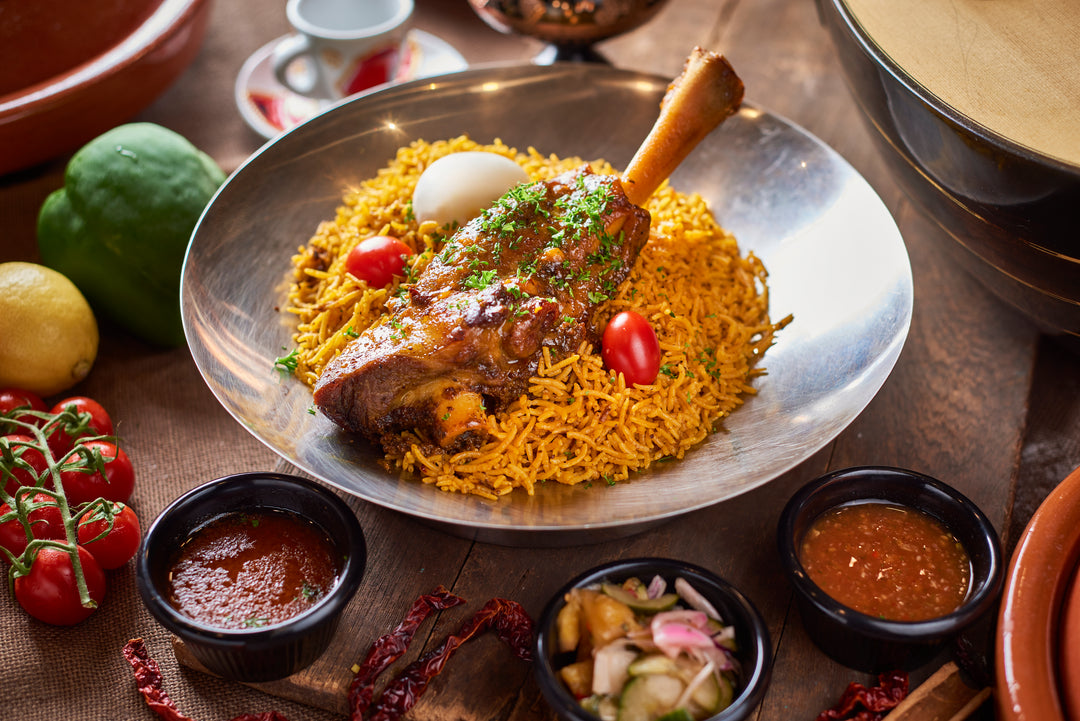
Then move into the heavier half of the menu. After cold mezze, Tarboush’s charcoal-grilled kebabs and rice dishes such as mandi, kabsah, and makloubah make much more sense because the palate has already been opened and the table is already in sharing mode.
Final thoughts
Cold mezze is the perfect start to an Arabic meal because it does several jobs at once, and does all of them gracefully. It opens the appetite without exhausting it. It turns the table into a shared space instead of a row of separate orders. It introduces the cuisine’s essential flavors before the richer mains arrive. And it signals authenticity by showing that Arabic food is not just about meat and rice, but also about legumes, vegetables, olive oil, acidity, smoke, bread, and hospitality.
For diners in Singapore, that makes cold mezze more than a pleasant beginning. It makes it the smartest beginning. In a warm climate, in a city built around communal eating and food discovery, and at a restaurant like Tarboush that balances classic Arabic naming with shareable menu design, cold mezze feels like the right first move now and will likely remain one. The more diners look for authentic, generous, social meals rather than just fast plates of food, the more valuable that first spread of hummus, smoky eggplant, salad, and bread becomes.
FAQs
What is cold mezze?
Cold mezze is a selection of chilled or room-temperature small plates, usually including dips, salads, vegetables, and bread, served for sharing as part of an Arabic or Eastern Mediterranean meal.
Is cold mezze only an appetizer?
Not always. Mezze can open the meal, but in many dining traditions it can also make up a substantial part of the meal itself, especially when several dishes are ordered together.
What is the difference between muttabal and baba ghanoush?
At Tarboush, muttabal is a creamy charcoal-grilled eggplant dip blended with tahini and lemon, while babaganoosh is smokier and more rustic, finished with lemon juice, capsicum, and olive oil. Tarboush also explicitly notes that the two dishes are not the same.
Which cold mezze should first-time diners order?
The safest first order is the Mezzeh Appetiser Platter, then Palestinian Hummus if you want a classic reference point. That combination gives a new diner both range and familiarity.
Does cold mezze pair well with grilled meats and rice dishes?
Yes. Cold mezze brings brightness, smoke, herbs, and acidity before heavier dishes such as kebabs, mandi, kabsah, or makloubah, which creates a more balanced meal overall.