Mandi, Kabsa and Makloubah: What Is the Difference?

Mandi, Kabsa and Makloubah can look surprisingly similar when they arrive at the table: fragrant rice, tender meat, warm Middle Eastern spices and generous portions designed for sharing. That similarity is exactly why diners often assume they are simply three names for roughly the same dish.
They are not.
The biggest difference is not whether you choose chicken or lamb. It is how the rice, meat and other ingredients are cooked together. Mandi is built around gentle aromatics and smoky, slow cooked meat. Kabsa gets much of its character from rice cooked in a seasoned, often tomato-based meat broth. Makloubah is a layered rice, meat and vegetable dish that is turned upside down before serving.
Understanding those differences makes ordering much easier especially when you want a particular flavour rather than simply “Arabic rice.”
Mandi vs Kabsa vs Makloubah: The Short Answer
If you only want the essential difference, think of the three dishes this way:
-
Mandi: choose it for aromatic rice, tender meat and a distinctive smoky character.
-
Kabsa: choose it for a richer, more savoury rice flavour, often supported by tomato, onion, dried lime and warming spices.
-
Makloubah: choose it for layers of rice, meat and vegetables, with more roasted vegetable flavour and textural variety.
You may also see different English spellings. Kabsa is sometimes written Kabsah or Khabsa, while Makloubah may appear as Maqluba, Maklouba or Maqloubeh. The spelling changes do not fundamentally change the dish.
What Makes Mandi Different?
Mandi's defining feature is the way heat and smoke influence the meat.
Traditional Yemeni Mandi is associated particularly with Hadhramaut. In the classic method, lamb or chicken is cooked inside a sealed underground or clay-lined oven, often suspended above the heat. This slow cooking allows the meat to become tender while developing the subtle smoky aroma for which Mandi is known.
Mandi is fragrant rather than sauce-heavy
The rice underneath the meat is typically seasoned with warm spices such as cardamom, cinnamon, cloves and cumin. Saffron may also be used. However, the purpose is not to bury the rice under a thick sauce.
A good Mandi should feel comparatively light and aromatic. You taste the individual grains, the meat juices, the warm spices and the smokiness rather than one dominant sauce.
That makes Mandi particularly appealing to diners who enjoy flavourful food but do not necessarily want a very rich or tangy rice dish.
The meat remains the centre of attention
Another important difference is the relationship between the rice and meat. With Mandi, the meat is very much the star sitting over the rice. Its tenderness and roasted or smoky aroma provide much of the dish's personality.
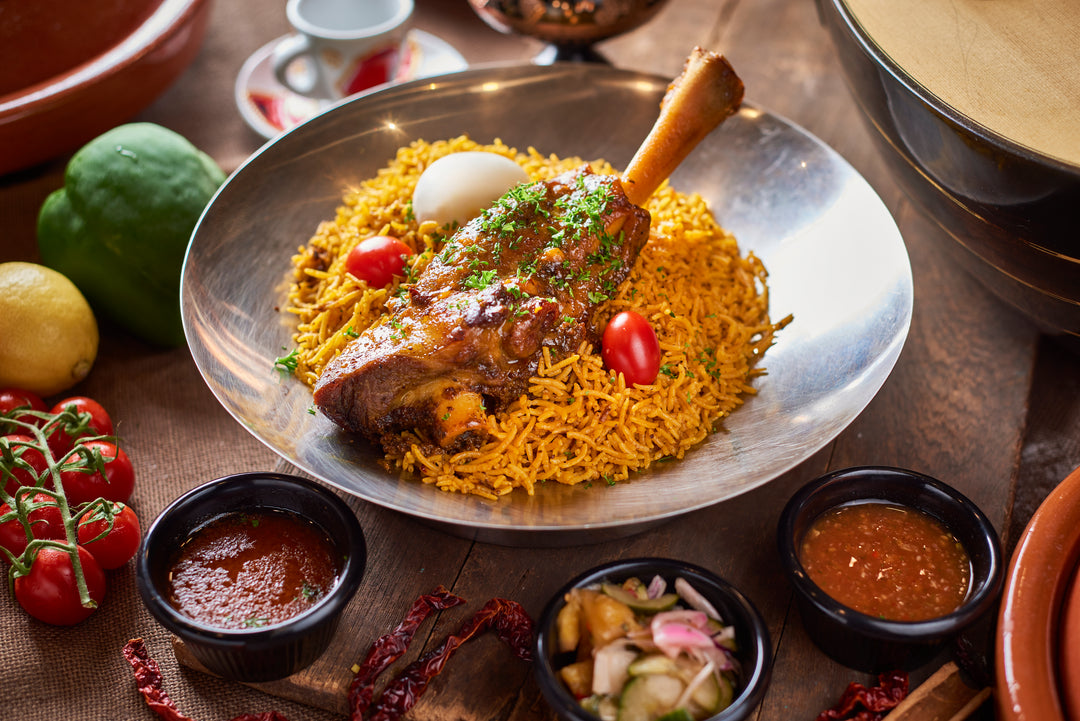
At Tarboush in Singapore, diners can explore Mandi rice dishes alongside Kabsah and Makloubah, including lamb shank and roasted chicken options. The restaurant's Mandi Lamb Shank is served with Mandi rice, saffron egg, Arabic salsa and Penang achar salad, while its roasted chicken option uses chicken marinated with a spice blend before roasting.
How Is Kabsa Different from Mandi?
Kabsa is strongly associated with Saudi Arabian cuisine and is one of the country's best-known traditional rice dishes. Its defining technique is much closer to one-pot cooking.
A traditional preparation commonly starts with onions, tomatoes and spices. Meat or chicken is cooked in this seasoned mixture, creating a flavourful broth. The rice then cooks in the liquid, absorbing the flavour left by the meat, tomatoes and spices. Saudi preparations commonly include cinnamon and dried black lime, or loomi, among other seasonings.
That changes the entire eating experience.
Kabsa's rice carries more of the flavour
With Mandi, you tend to notice smoke and meat first.
With Kabsa, the rice itself has a stronger cooked-in flavour because it absorbs the seasoned liquid. Tomatoes and onions can give it more body, while dried lime adds a subtle tartness and complexity.
This is why Kabsa can taste richer and deeper even when the meat choice is exactly the same.
It is also worth noting that there are many regional and family versions of Kabsa. Not every plate will contain exactly the same quantity of tomato, spice or dried lime. The one-pot method and intensely seasoned rice are more useful identifiers than expecting one fixed recipe.
What Makes Makloubah Completely Different?
Makloubah changes the formula again because vegetables become a major part of the dish rather than a simple side.
Its Arabic name means “upside down,” which describes its most recognisable serving technique. Rice, meat and vegetables are arranged in layers inside a pot and cooked together. Once everything is ready, the pot is inverted onto a large serving plate so the contents come out as one structured mound.
Vegetables are part of the structure
Eggplant and cauliflower are two classic Makloubah ingredients, although potatoes, tomatoes and other vegetables can also appear depending on the recipe.
This matters because the vegetables do much more than add colour. Roasting or frying them develops deeper, slightly caramelised flavours, while their texture breaks up the rice and meat.
Compared with Mandi's restrained smokiness or Kabsa's seasoned rice broth, Makloubah therefore tends to feel more earthy, vegetable-forward and texturally varied.
Makloubah belongs to a wider Levantine tradition
Modern Makloubah is strongly associated with Palestinian and Jordanian cooking and is also prepared elsewhere across the Levant. Historical versions and related dishes appear much earlier, including references connected to medieval Baghdad, which helps explain why attempts to assign the dish to one modern country can oversimplify its long history.
For the diner, however, the easiest identifier remains the same: if the dish is built from layered rice, vegetables and meat and then flipped for serving, you are in Makloubah territory.
Which Dish Has the Strongest Flavour?
“Strongest” depends on what kind of flavour you mean.
Mandi usually gives you the clearest smoky and roasted character. Its seasoning tends to support the meat without making the rice overly heavy.
Kabsa normally gives you the strongest savoury rice flavour because the grains absorb a seasoned cooking liquid containing meat juices, aromatics and often tomato.
Makloubah provides the strongest vegetable and textural contrast, especially when eggplant or cauliflower has been fried or roasted before being layered into the pot.
None of the three needs to be chilli-hot. Middle Eastern spice blends are often aromatic rather than aggressively spicy. Chilli heat can instead come from tomato salsa or another condiment served alongside the rice.

Mandi, Kabsa or Makloubah: Which Should You Order?
Choosing becomes much simpler once you decide what you want from the rice rather than focusing only on the meat.
-
Order Mandi if: you like tender meat, separate fluffy grains and a subtle smoky aroma. It is also a good starting point if you prefer gentler seasoning.
-
Order Kabsa if: you want the rice itself to taste rich, savoury and deeply seasoned, with more noticeable onion, tomato or dried-lime character.
-
Order Makloubah if: you enjoy eggplant, cauliflower or other cooked vegetables and want more variation in texture from one mouthful to the next.
If several people are dining together in Singapore, another option is to order different rice styles with similar meats. Comparing chicken Mandi with chicken Kabsah, for example, makes the difference in the rice much easier to appreciate than comparing two completely different meat dishes.
Why the Cooking Method Matters More Than the Ingredient List
Looking only at an ingredient list can make Mandi, Kabsa and Makloubah appear almost identical. All three may contain rice, lamb or chicken, cardamom, cinnamon and other familiar Middle Eastern seasonings.
The cooking method is what turns those shared ingredients into three recognisably different meals.
Mandi uses the cooking environment around the meat to create aroma and tenderness. Kabsa uses seasoned liquid to build flavour into every grain of rice. Makloubah uses layering and inversion to combine rice with meat and vegetables in a completely different structure.
That is the most useful distinction to remember when reading a menu.
Conclusion
Mandi, Kabsa and Makloubah belong to overlapping Middle Eastern food traditions, but they should not be treated as interchangeable rice dishes.
Mandi is about smoke, aroma and tender meat. Kabsa is about richly seasoned rice cooked with the flavours of meat, aromatics and often tomato. Makloubah is about layers particularly the combination of rice, meat and vegetables that is dramatically inverted before serving.
Once you know those differences, choosing between them becomes a matter of preference rather than guesswork.
For diners in Singapore, that distinction is becoming increasingly useful as Arabic and Middle Eastern menus grow more varied. The more regional dishes become available the less useful it is to group everything under “Middle Eastern rice.” Understanding the technique behind each dish gives you a much better idea of what will actually arrive at the table and which one you are most likely to enjoy.
Frequently Asked Questions
Is Mandi the same as Kabsa?
No. Traditional Mandi is known for slow-cooked meat and a smoky, aromatic character. Kabsa is generally prepared using a one-pot method in which the rice absorbs a more strongly seasoned broth.
Which is spicier: Mandi or Kabsa?
Kabsa often tastes more intensely seasoned but neither dish has to be chilli-hot. Mandi is generally more aromatic and smoky, while Kabsa may taste richer and tangier.
Why is Makloubah called upside down rice?
Makloubah means “upside down” in Arabic. The ingredients are layered and cooked in a pot, which is then flipped onto a serving platter before the dish is eaten.
Does Makloubah always contain eggplant?
Not always. Eggplant is very common, but recipes may also use cauliflower, potatoes, tomatoes or combinations of different vegetables.