
How to Choose the Perfect Main Course at an Arabic Restaurant

Choosing a main course at an Arabic restaurant sounds simple until you open the menu and realize “main” can mean very different things. At Tarboush in Singapore, the Mains section alone lists 17 in-stock dishes, ranging from Saksuka at S$13.90 to Testi Kebab for 2 Person at S$73.90. On top of that, the restaurant separates Mains from Mandi, Khabsa, Makloubah & Rice, Charcoal Grilled, and Mixed Charcoal Grilled Platters, which means the best choice is not just about liking chicken, lamb, or fish. It is about choosing the right format, flavor profile, and portion for the way you want to eat.
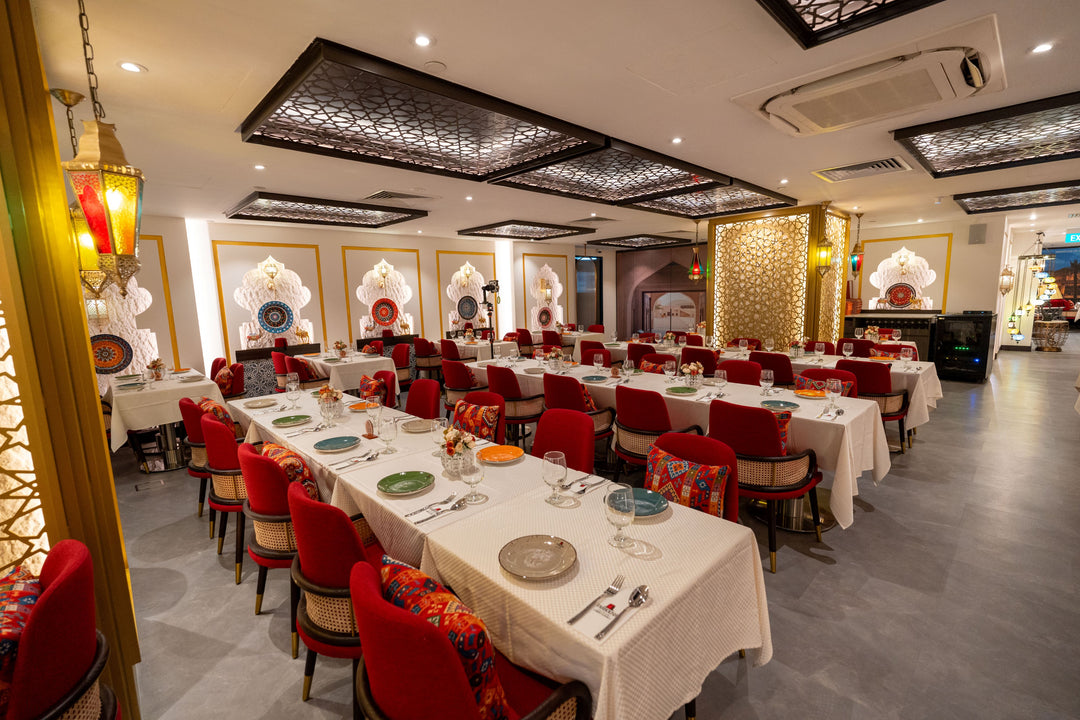
That matters even more in Singapore, where Tarboush operates in both Bugis and Orchard, offers islandwide delivery, and presents itself as a halal-certified Arabic and Middle Eastern restaurant. A diner may be choosing for a quick lunch, a date-night dinner, a family meal, or an online order where there is no server beside the table to explain the difference between a tagine and a clay-pot specialty. The perfect main, then, is not the “most expensive” or “most traditional” item. It is the dish that best fits your appetite, your company, and the mood of the meal.
Start with the kind of meal you actually want
The smartest way to order at an Arabic restaurant is to decide first whether you want a personal plated entrée, a shared centerpiece, or a rice-led Arabic feast. That matters because Middle Eastern dining often leans communal. Mezze, for example, is not always just a starter; it can make up an entire meal, and the format is built around sharing, variety, and relaxed pacing. Tarboush’s own writing also emphasizes togetherness, generous portions, and platter-style dining as part of the experience.
So if your table is already ordering hummus, salads, and hot starters, it often makes sense to choose a lighter or cleaner main rather than another very heavy centerpiece. On the other hand, if the main is supposed to carry the meal on its own, then a richer choice such as ribs, lamb, or a clay-pot dish makes more sense.
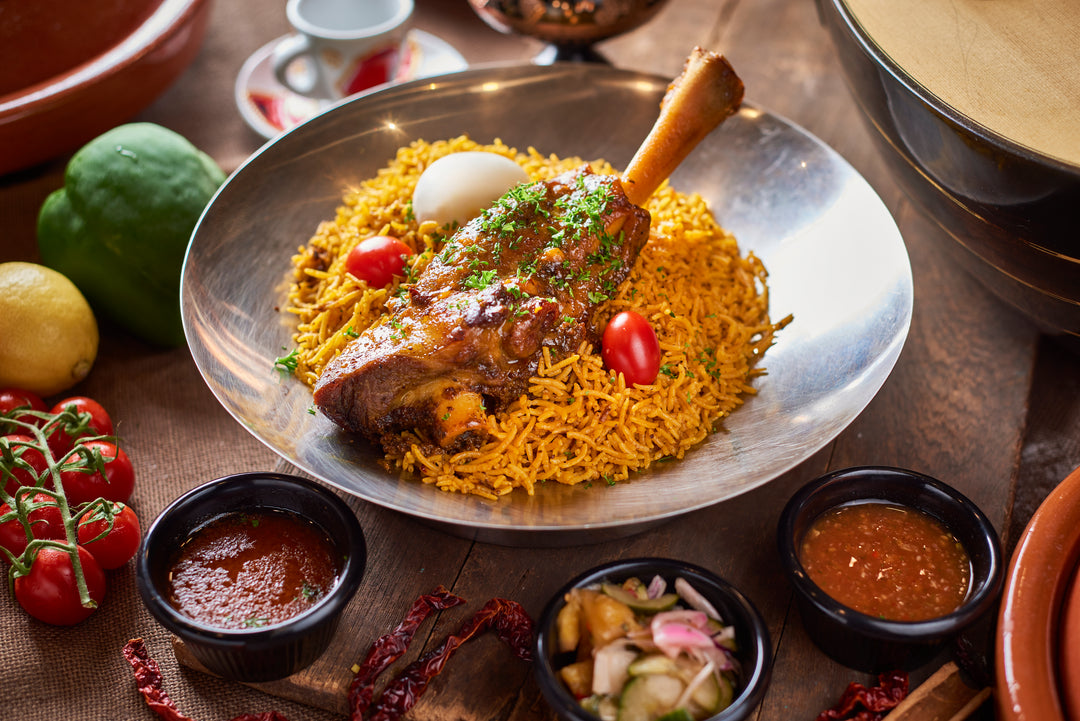
There is one more important distinction on Tarboush’s menu: if what you really want is the classic Arabic experience of fragrant rice with slow-cooked meat, you may want to look beyond the Mains section and into Mandi, Khabsa, Makloubah & Rice. Tarboush specifically separates that category, and its own description of mandi highlights a lighter, aromatic, subtly smoky rice style that works especially well for sharing. In other words, not every “best main” sits under the page labeled Mains.
Read the menu by cooking style, not just by protein
A lot of diners choose by ingredient first. Chicken or lamb. Fish or beef. That is understandable, but on an Arabic menu, cooking style often tells you more about the actual eating experience than the protein alone.
Choose smoky and grilled if you want bold, direct flavor
If you like food that tastes confident from the first bite, go toward the grilled and barbequed side of the menu. Tarboush’s Grilled Baby Lamb Rack is described as Mashhady-style marinated spring lamb chops that are skewered and charcoal grilled, while its Barbeque Beef Ribs and Barbeque Lamb Ribs are both smoke-flavored, slow-cooked for three hours, and served with mandi rice, black pepper sauce, and salad. Tarboush’s own guide on shawarma versus kebab also frames kebabs as the choice for diners who want the smoky satisfaction of grilled meat rather than the softer juiciness of a wrap.
This is the right lane for diners who want a hearty, savory main with obvious structure on the plate. It is especially strong for dinner, for people who prefer meat-forward meals, or for tables where someone wants a dish that still feels substantial even after sharing starters.
Choose slow-cooked comfort if you want tenderness and depth
If you are after something softer, more layered, and more comforting than a straight grilled plate, look for the menu items built around slow cooking. Tarboush’s Moroccain Chicken Tagine, Moroccain Lamb Shank Tagine, and Moroccain Vegetarians Tagine clearly signal that direction, and a tagine itself is traditionally a North African braised dish associated with moist, gently concentrated flavors. Tarboush also offers Testi Kebab for 2 Person, described as a specialty of lamb and vegetables baked inside a clay pot and opened at your table, which adds both tenderness and a bit of theatre.
This category works well for diners who do not want the dryness that can sometimes come with grilled meats, or who prefer mains that feel warmer, saucier, and more relaxed. It is also a smart choice for date-night dining because these dishes feel distinctive without being hard to enjoy.
Choose seafood or herb-led plates if you want something lighter
Not every Arabic-restaurant main needs to feel heavy. Tarboush’s Baramundi comes with saffron cream, spiced edamame, mussels, and creamed kale; its Salmon Steak is paired with fresh herbs, lemon juice, seasonal vegetables, and mashed potato; and its Roasted Chicken is built around thyme and tarragon butter, charred leeks, asparagus, and chicken jus. These are the kinds of dishes that suit lunch, smaller appetites, or anyone who wants a cleaner finish rather than a rich, smoky meal.
This is also the safest lane for first-time diners who like the idea of Arabic dining but want something familiar in structure. You still get the restaurant’s flavor sensibility, but through fish, herbs, citrus, and vegetables rather than through deep smoke or slow-cooked richness.
Choose premium cuts if you want a special-occasion plate
Some diners love Arabic restaurants for grilled classics, while others want a more premium plated entrée. Tarboush gives both options. Its “VINTAGE” Australian Rump Cap and “GORINA” Argentinian Ribeye are both 200gm seared cuts priced at S$44.90, with composed sides such as pumpkin purée, burnt eggplant purée, char-grilled potato, asparagus, and oyster mushroom.
These are smart choices if you are dining with someone who usually gravitates toward steakhouse food, or if you want the atmosphere and hospitality of an Arabic restaurant without moving too far from a classic premium meat experience. They are less about exploring tradition at its deepest and more about blending comfort, quality, and occasion.
 Match your choice to appetite, table size, and budget
A good order feels effortless on the table, and that usually comes down to three things: how hungry you are, how many dishes the table is sharing, and how much you want to spend. Tarboush’s Mains section naturally falls into a few tiers: dishes such as Roasted Chicken sit at S$22.90; seafood plates like Baramundi and Salmon Steak sit at S$27.90; richer middle-tier options like Barbeque Beef Ribs and Moroccain Chicken Tagine are S$34.90; Barbeque Lamb Ribs are S$38.90; premium plates reach S$44.90 to S$48.90 and the shareable Testi Kebab for 2 Person goes to S$73.90.
A simple shortlist helps:
-
If you are also ordering mezze, lean toward Baramundi, Salmon Steak, or Roasted Chicken so your meal stays balanced.
-
If you want one dish to do most of the work, choose ribs, lamb rack, or a tagine-style option.
-
If you want built-in drama and sharing value, Testi Kebab is the obvious pick.
-
If you want rice already paired with the protein, the beef and lamb ribs already come with mandi rice, while true rice-feast diners should also consider the separate Mandi section.
-
If you are ordering delivery, dishes with clear structure and accompaniments, such as ribs, roasted chicken, or salmon, tend to be easier to imagine and portion mentally from the menu. Tarboush also explicitly supports fast islandwide delivery.
The real trick is to stop asking, “What is the signature item?” and start asking, “What kind of evening am I trying to create?” That question usually leads to the better order.
Best Tarboush picks for common dining situations
If you want a practical shortcut, these are the choices that make the most sense for different diners and occasions.
-
Best for first-time diners: Roasted Chicken. It is familiar in structure, but the thyme, tarragon butter, leeks, asparagus, and jus keep it from feeling ordinary.
-
Best for a lighter lunch: Baramundi or Salmon Steak. Both give you a cleaner, less heavy plate and still feel polished.
-
Best for smoky meat lovers: Grilled Baby Lamb Rack or Barbeque Lamb Ribs. These are the mains with the strongest grill-and-smoke identity.
-
Best for a special dinner: Argentinian Ribeye or Australian Rump Cap. They bring a premium-cut experience into the Arabic dining setting.
-
Best for sharing or a memorable table moment: Testi Kebab for 2 Person. The clay-pot format makes it feel like more than just another entrée.
Notice what is happening here: the “best” choice changes with the diner, not just the dish. That is exactly why broad Arabic menus reward a little strategy.
The mistakes that make people order the wrong main
The most common mistake is ordering by protein only. Someone sees lamb and chooses it immediately, without noticing whether that lamb appears as chops, ribs, a rice platter, or a tagine. Those formats eat very differently. Lamb rack is clean and grilled; lamb ribs are smoky and rice-backed; lamb shank tagine signals slow-cooked comfort; and mandi-style dishes bring an entirely different rice-centered experience.
The second mistake is treating an Arabic restaurant like a rigid Western three-course meal. In many Middle Eastern settings, shared plates and flexible pacing are the point. If the table is already building a mezze spread, the main should complement that spread rather than compete with it.
The third mistake is assuming Arabic food always means intense spice. Tarboush’s own menu descriptions tell a more nuanced story: saffron cream, herbs, lemon juice, vegetable sides, aromatic mandi rice, and slow-cooked meats show a range that goes far beyond heat. If you dislike aggressive spice, you do not need to avoid the cuisine. You just need to choose the right lane within it.
Conclusion
The perfect main course at an Arabic restaurant is not the one that sounds the most exotic. It is the one that matches your appetite, your company, and the kind of meal you want to remember. At Tarboush, that could mean a clean seafood plate, a grilled lamb dish, a smoke-forward rib entrée, a clay-pot showpiece, or even a decision to step outside the Mains page and choose a rice-led Arabic platter instead. The menu is broad enough to support all of those choices, which is exactly why ordering with intention matters.
Looking ahead, that is likely what will shape Arabic dining in Singapore most: not just more interest in the cuisine, but more confidence in reading it properly. As diners get better at recognizing cooking style, serving format, and table context, they move beyond “safe” ordering and start enjoying Arabic food the way it is meant to be enjoyed — with clarity, generosity, and pleasure.
FAQs
What is the safest first order for someone new to Arabic food?
Roasted Chicken is a smart first pick because it is familiar in format but still carries herb-forward character through thyme, tarragon butter, and jus.
What should I order if I want something lighter?
Go for Baramundi or Salmon Steak. Both read as cleaner, less heavy mains than ribs, lamb, or clay-pot dishes.
Are Arabic mains always spicy?
No. Tarboush’s menu includes herb-, lemon-, saffron-, and smoke-led dishes, and its mandi is described as lighter and aromatic rather than heavily seasoned.
What is the best main for sharing?
From the Mains section, Testi Kebab for 2 Person is the clearest sharing choice. If you want an even more traditional shared format, look at the separate Mandi, Khabsa, Makloubah & Rice section too.
Should I choose from Mains or from the Mandi and Rice section?
Choose Mains if you want a plated entrée like fish, steak, ribs, or roasted chicken. Choose Mandi and Rice if you want a more classic Arabic rice-and-meat experience built for sharing.